

10 years of media support around the world
As 2011 draws to a close, International Media Support (IMS) celebrates its 10th year of support to media around the world
Starting out in only a few countries in the wake of the tragic events in Rwanda and former Yugoslavia, IMS has over the years expanded into a global organisation working on four continents in over 50 countries.
Partnering with both local and international media organisations to benefit from local knowledge and to ensure a concerted international approach to media development, has been a cornerstone of IMS’ work for ten years.
Safety of journalists
Over the years thousands of journalists and media workers have been supported through our local partners, most often with professional skill building. Many journalists however work in countries of conflict and war, where safety is of crucial concern.
Through safety training and support structures for those journalists facing threats and attacks for simply performing their work, we try to make sure they can operate even in the most difficult of settings.
In Afghanistan, a country affected by war throughout the existence of IMS, hundreds of journalists have received safety training. This combined with conflict sensitive journalism, enables them to report on their countries’ own conflicts while trying to bring about peaceful transitions to democracy.
Promoting the media’s watchdog role
With support networks for investigative journalists in Eastern Europe and Caucasus, the Arab world and Africa, nearly 600 investigations of corruption and misuse of power have been conducted by an increasing number of professional and enthusiastic journalists who seek to promote the media’s role as a watchdog.
Since 2005, 425 investigations have been carried out in Eastern Europe and Caucasus through the SCOOP network. One of them directly contributing to the fall of former President Vladimir Voronin in 2009 when his misuse of power surfaced through an in-depth investigation carried out by five young journalists.
Monitoring for accuracy and non-biased election coverage
Through our local partners, the media coverage of 18 elections in 12 unstable or emerging democracies has been monitored by closely examining the airtime and column length, to promote a fair and balanced coverage of one the crucial tests of democracy.
Watch a slideshow chronicling a small selection of the work carried out by International Media Support and our partners in the past ten years
Media law and regulation
In countries where freedom of expression and the right to access to information are not enshrined by national law, our national partners work to reform legislation, an often long and difficult process.
After 2,5 years of concerted effort and advocacy, “The Law on Access to Information” was passed in Ukraine in May 2011, a landmark achievement setting a new standard of freedom of information for the post-Soviet country.
Providing life saving information to people in need
The past years have seen several both man-made and natural disasters. Most recently the drought and famine in Somalia have displaced hundreds of thousands of people seeking shelter, food and safety. In Kenya, the local radio station Radio ERGO supported by IMS’ daughter conmpany IMS productions aps, provide daily humanitarian news in Somali largely from Somalia with their 20-25 stringers there, and with some coverage from their stringers in the camps and other diaspora communities.
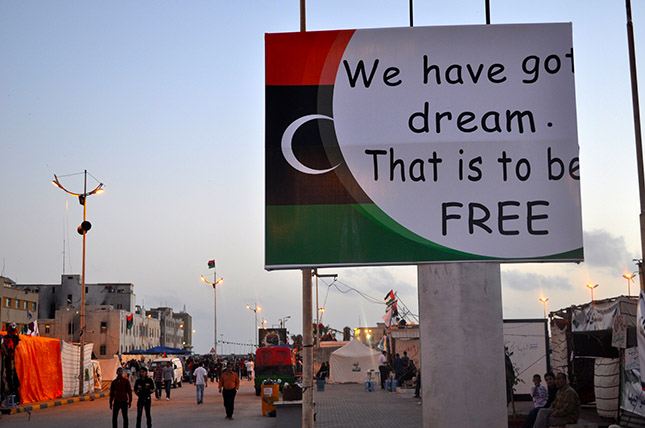
During recent developments like those in the Arab world, the media has played a crucial part in promoting democracy and freedom of expression. But populations in many countries still remain under dictatorial rule and thousands of journalists continue to face harassment and curtailing of their most fundamental freedoms every day.
In an interview with Danish Radio 24 Seven on the occasion of IMS’ 10 year anniversary, Executive Director Jesper Højberg said:
“Press Freedom has not improved at a global level despite recent developments in the Arab World. Of course these events have created new hope and many regimes around the world are undoubtedly finding remedies to counter the continuation of revolutions in their countries. This will constantly challenge the independent media, journalists and even the young civic journalists that have emerged during the Arab Spring.”
“IMS will have to be in the frontline of these events, which I also believe we have been until now. We need to be present when journalism is made impossible and brutally blocked and we have to be there when new political opportunities suddenly arise as in the case of in Libya and Burma.”