


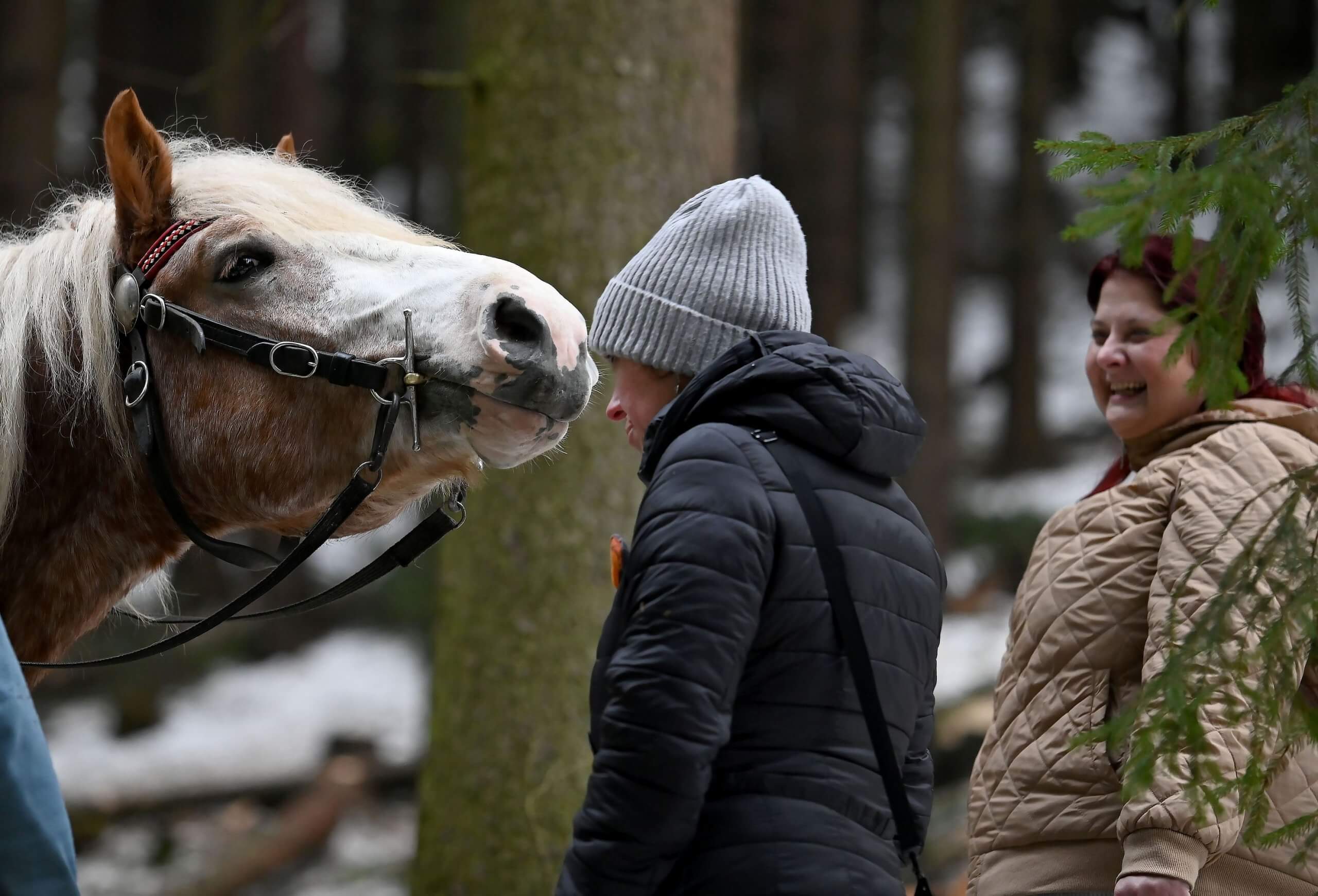
Michaela Mašková, editor-in-chief of Naše Broumovsko with a colleague interviewing a forester working with horses. Photo: Naše Broumovsko
PM4D Impact
There is value in stories of overlooked people
Local media Naše Broumovsko in the Czech-Polish border region found purpose and ambition through investing in their own strengths: local insight and presence.
“We are genuinely interested in those who live here!” For editor-in-chief Michaela Mašková there is no hesitation regarding the value offered by the local media outlet where she works.
She adds: “I doubt that you will find interviews with these people elsewhere. Through a local media, people get to see their own importance.”
Michaela Mašková is 49 years old. She made the move to the Northen Broumovsko region of Czechia a decade ago. She left Prague and a career in journalism at a national outlet for a region full of climbing opportunities and natural beauty, but with few opportunities to work in journalism. Instead, she taught yoga, started a family and spearheaded a human rights film festival. Five years ago, an opportunity to return to journalism presented itself and she joined the media outlet Naše Broumovsko.
Back then, the outlet published press releases and had no original content. The editor-in-chief and the paper both needed a fresh start, and she took over. Five years later change is tangible.
“I had to start from scratch to create credibility with our audiences. I got lucky and received a grant – The Local Media for Democracy (LM4D) in 2023. This funding allowed me to recruit another person for the newsroom and work with volunteer community contributors.”
The paper now counts two staff and six volunteers. One of the volunteers, an architect, receives funding from the Czech Chamber of Architects for regional activities to write content.
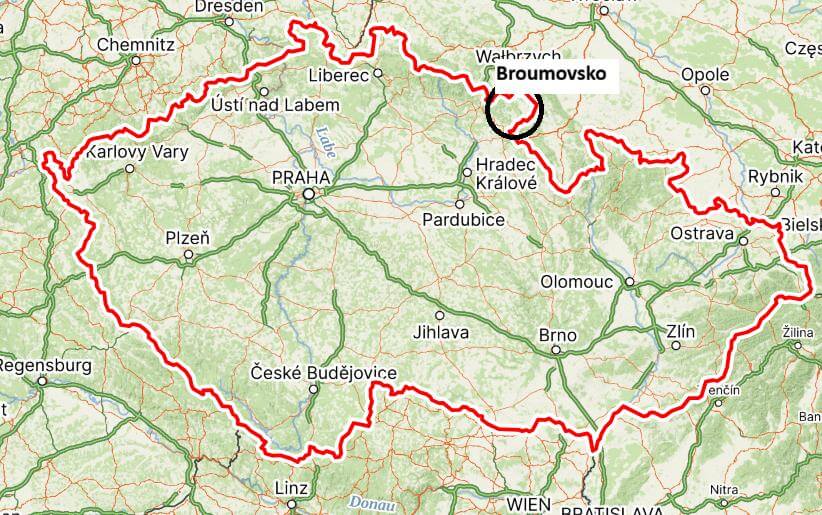
Although this region only occupies a small area and has just 20,000 residents, people still feel divided and spread out among the three cities and 14 villages. The troubled past of region lingers from the forced relocation of German-speaking people after World War II. To forge connections and increase a sense of community, she and her team set out to feature locals and amplify their stories and needs in the public sphere.
View from IMS
With the LM4D grant Naše Broumovsko organised what they called “Local Journalism Simulator” – a training program for citizen journalists from the community. With PM4D, they paired several alumni of this programme with professional editors and journalists to produce the stories.
“It’s a strategic approach not only for enhancing a small newsroom with trained citizen reporters, but also a way to get different perspectives and build stronger ties with residents,” says IMS business adviser Iryna Vidanava.
Overlooked no more
Funded through the Pluralistic Media for Democracy programme (PM4D), Michaela Mašková and the team had set out to produce content about three marginalised groups – manual laborers, seniors, and young people – and some Roma.
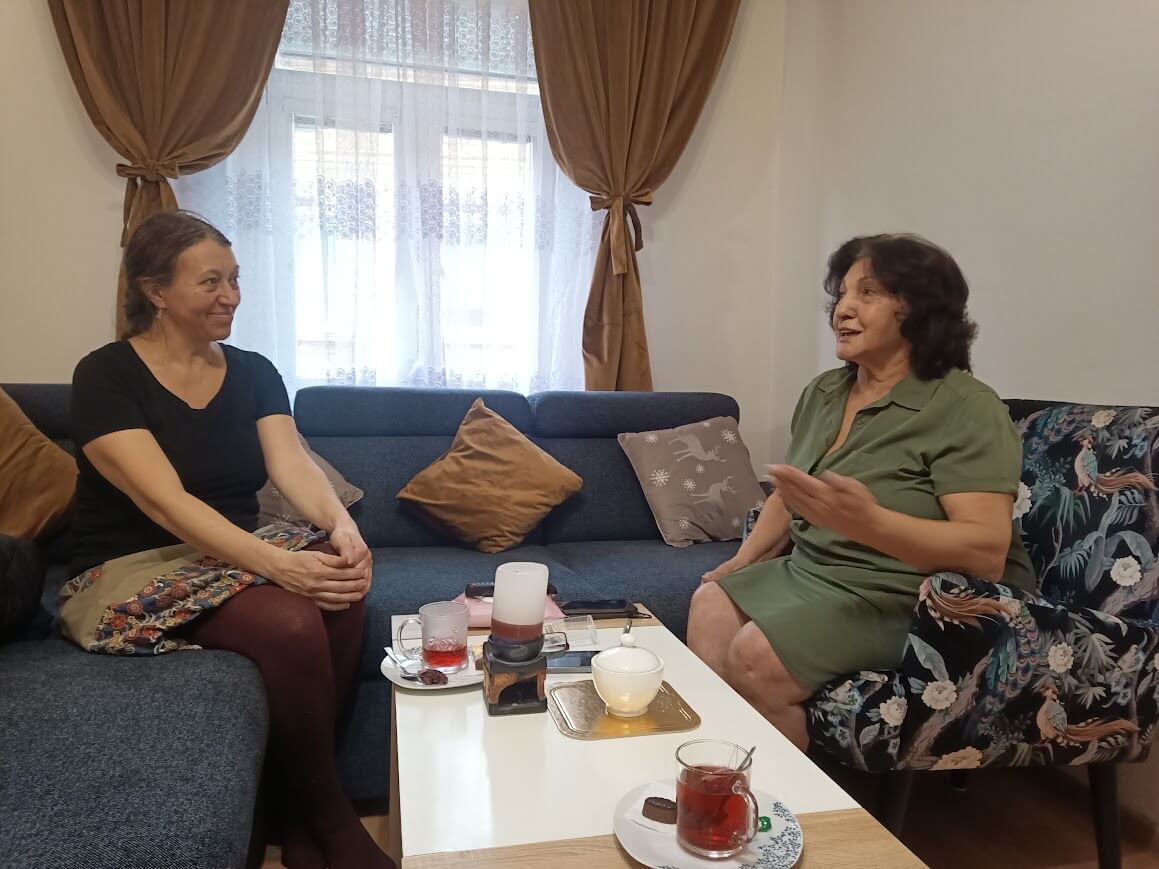
“Initially, we asked those we met when out and about and so it was by chance who got to share their story with us. However, we gradually began to focus on the marginalised groups. These groups included people from the Romany community. It is not easy to gain access to the Romany community, whose population is relatively large in the region. A community that faces prejudice and racism daily is quite wary and distrustful. After several attempts to contact random passers-by, we arranged through a local Romany association called Start Together to interview three, who had agreed to talk with us. We consider establishing this cooperation a success, as these contacts will also be useful for our future work.”
“Trust-building is important and we did encounter fear of being exposed and of talking about sensitive topics such as salaries and working conditions, belonging to a disadvantaged group, voting preferences – and not just with Roma. We worked on those challenges by focusing on the principles of journalistic work, which include the possibility of authorising the output. Still, two people of 26 ultimately refused to have their interview published.”
| Goal | Result | Impact |
|---|---|---|
| We planned 30 multimedia stories with three cases from each of our three target groups. | We produced 82 multimedia stories with 26 respondents from the three target groups | We have succeeded in connecting the region’s residents. Feedback highlighted how positive it is that we are presenting locals. Readers began to share information. We are truly becoming a community media outlet. |
| We planned to create our own platform to play multimedia content directly on our website, without YouTube. | After consulting with IMS, we decided to set up a YouTube channel and instead redesign our website to make it more modern and user-friendly. | Website redesign – new page layout and option to insert an advertising banner into the text. |
| We planned to organise a public debate | The public debate was successfully organised as a main public output from the project. | The public debate was attended by mayors and other public authorities. The debate highlighted the need to discuss public issues on a regular basis. |
A greener news ecosystem
Interviews in The Stories of Overlooked People project had a higher number of readers than average and Michaela believes the project has made the local news desert a little greener, primarily through its focus on locals.
“At a time when journalists often work from behind desks and obtain information via telephone and internet, we met people face-to-face. We believe that this method has given our work credibility and brought us a deeper understanding of the region in which we live and work, but where some of us were not born. We had the opportunity to understand our readers better, to get to know who we write for, or who we could write for. Also, by enriching the content with multimedia outputs, we have also offered our audience a more accessible way of obtaining information, which we intend to continue,” she says.
As part of the series, she published an interview with a woman living in a borderland formerly known as Sudetenland. She was born after World War II into a German family, but her mother died when she was young and her father was unable to care for her. She grew up in the Broumov region with her brother as an orphan until she was 10, when her father remarried and was able to take care of her. She experienced not only loneliness, but above all daily condemnation and ostracism because she was German. She left the Broumov region as an adult and returned 20 years later.
The story touched a nerve with readers and the woman reached out to Michaela and thanked her.
Read the interview Náš jazyk vymře s mojí generací, říká Marianna Tomašovská
“After the article was published, she was surprised how many people started talking to her on the street and in cafés, saying they had no idea what her fate had been.”
For Michaela, it is important to showcase the life you can live in Broumovsko and convey that you do not necessarily miss out by living here. She and her colleagues have told stories of people who returned from elsewhere and she is of the belief that by featuring stories of people 30+ years old and their reasons for coming back, the media outlet has challenged an otherwise persistent narrative about everything being wrong in this part of the country. “Perhaps we will even see more people return,” she says.
Learning business tools to do more journalism
An important component of the PM4D grant is the capacity development from IMS media experts on business development, which grantees can access.
“I gained a better understanding of how to work with income streams and created a business plan for 2026. I also got ideas for how we can monetise and will work on creating paid short videos to showcase traders and small businesses. I may also search for an investment partner and talk with other media who know about crowdfunding.
“I feel that we have become a true community media outlet in our micro-region, but we are also gaining professional renown at the national level. At the same time, we have managed to foster pride among locals, showing that they lead worthy lives and do not need to face their problems alone. “
Obstacles such as having to learn about new technical applications and multimedia formats were handled thanks to IMS workshops and consultations with professionals. Shortfalls in the collaboration between experienced journalists and non-professional community field reporters were overcome by creating a work manual and through joint reflection.
Michaela Mašková finds that her thinking has expanded. “Five years ago, I just wanted to write all the articles myself – now I want to build a small newsroom,” she says.
All articles can be found here: https://nase.broumovsko.cz/mediateka/clanky
We’ve asked newsrooms to highlight any change or achievements resulting from interventions, activities or news articles that have been part of the PM4D programme.
Why do we not just report on how many media outlets we supported, how many received a training in AI and in advertising?When impact is documented, shared and celebrated, journalism becomes easier to fund, easier to defend, and harder to ignore.
The Media Pluralism Fund is operated by Journalismfund Europe and the Capacity Building and Mentorship is run by IMS (International Media Support). This project is co-funded by the European Commission and the King Baudouin Foundation.


