

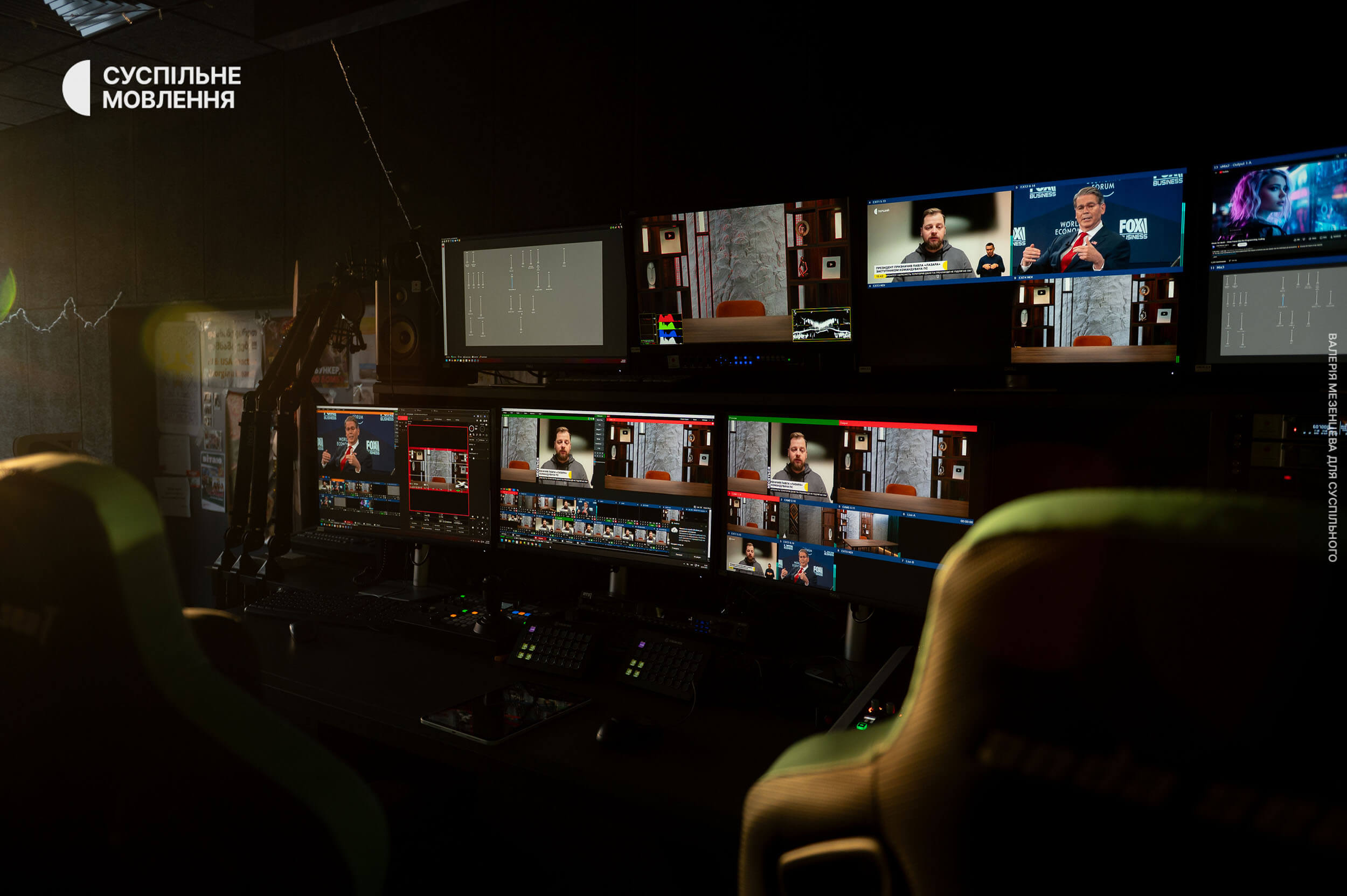
Suspilne Ukraine newsroom. Photo: Valeriia Mezentseva/Suspilne Ukraine
IMS (International Media Support) will provide support to 25 more media outlets in Ukraine
In 2026, IMS (International Media Support), in partnership with the Ministry of Foreign Affairs of Denmark (Udenrigsministeriet) and the Swedish International Development Cooperation Agency (Sida) – which systematically support the Ukrainian media sector – will finance the projects of 25 Ukrainian media outlets. The selected newsrooms will implement initiatives aimed at strengthening the information resilience of communities across the country, ensuring access to quality news, reinforcing local journalism and developing factchecking skills among audiences.
The supported initiatives cover a wide range of objectives from guaranteeing access to verified information for residents of frontline and border regions to the development of investigative journalism, analytical reporting, explanatory journalism and projects designed to strengthen public dialogue among different social groups.
According to Gohar Khodjayan, Programme Manager at IMS (Copenhagen), one of the key priorities of this funding round is the support of local media operating in high-risk areas where stable journalistic work is complicated by constant security threats, power outages, infrastructure damage and information attacks.
Thus, funding will be provided to newsrooms that ensure stable access to news for local communities in frontline settlements, including in Kharkiv, which is located less than 40 kilometres from the border with Russia. In the city, where more than 1.4 million people are expected to reside by 2026, daily missile and guided aerial strikes significantly complicate journalists’ work. Meanwhile, Russian disinformation attempts to undermine trust in Ukrainian institutions and media, exploiting the concept of “information voids” to disorient local residents. Under such conditions, the continuity, professionalism and stability of local journalism are crucial for informing communities and maintaining social cohesion.
Similar challenges remain critical for audiences in the Kherson region, which suffers from daily shelling and information blockades in the occupied territories, as well as in the Sumy region, which borders Russia and regularly becomes the target of hybrid operations. The industrial city of Kryvyi Rih and other regions face comparable pressures. In these areas, newsrooms operate under difficult conditions, providing people with essential and verified information, including explanations about shelling, humanitarian issues, local government decisions and safety recommendations.
At the national level in 2026, IMS will also support media outlets developing investigative journalism, factchecking, analytical formats and public-interest reporting that help people in Ukraine navigate state policy, reforms, social processes and information threats. Some projects will focus on covering topics related to veterans, internally displaced persons, people with disabilities and other social groups requiring greater visibility and accurate, ethical representation in the media space.
According to Zuraby Alasaniia, National Adviser at IMS in Ukraine (Kyiv), the full-scale war has demonstrated that the safety of local communities directly depends on access to verified information and the work of journalists. At the same time, newsrooms are confronted with new extraordinary challenges that often appear insurmountable: from destroyed offices after shelling to the absence of financial resources for professional work and organisational development. Among the most pressing needs and problems of the media sector in 2026: financial stability and financial independence; efficiency of information provision (an effort to keep up in the competitive battle with the network); preservation of classic journalistic standards against the backdrop of efficiency; work with communities from local communities to club formats; and global trends (adaptation to changes in social media algorithms and the emergence of new formats).
IMS emphasises that supporting Ukrainian media in 2026 remains a key component in protecting democratic society during wartime. Ensuring citizens’ access to independent, verified and high-quality information is essential for the functioning of resilient communities and is an important element of national security.
“International Media Support has worked for 25 years in countries where journalism requires support due to armed conflicts and other threats. Since 2022, our team has been striving to consolidate all resources and expertise to support colleagues in Ukraine, even as geopolitical shifts and the erosion of global partnerships create enormous pressure on European organisations and on our fund in particular,” noted Gohar Khodjayan.
More information on other IMS programmes and projects in Ukraine
- Merit Forum 2025
- MERIT Forum exchange on media resilience
- Calling Ukrainian media experts – applications open for MERIT FORUM 2026
- Seven lessons learned for media resilience during long‑term war
- IMS condemns the recent attack in Dnipro City that damaged Suspilne property
- One hundred days of war in Ukraine
We invite you to learn more about journalism in Ukraine in the news article on the emotional state of media professionals, as well as in the news piece on investigative journalism.
Read also about the global challenges of journalism in the key points shared by Jesper Højberg, Executive Director of IMS.
Learn more about how you can support Ukrainian journalists with your donation.