

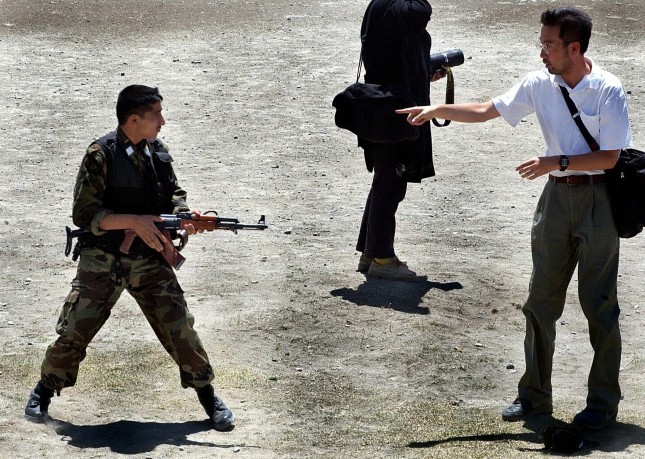
Reporter meets soldier, Afghanistan 2002. Photo: Jewel Samad/AFP
Conflict sensitive journalism revisited
The changing face of media in the last ten years, has prompted IMS to revisit its conflict sensitive journalism approach to reflect the reality of reporting on conflicts today. Ranga Kalansooriya, IMS, reports on an expert workshop in Nairobi
By Ranga Kalansooriya, IMS
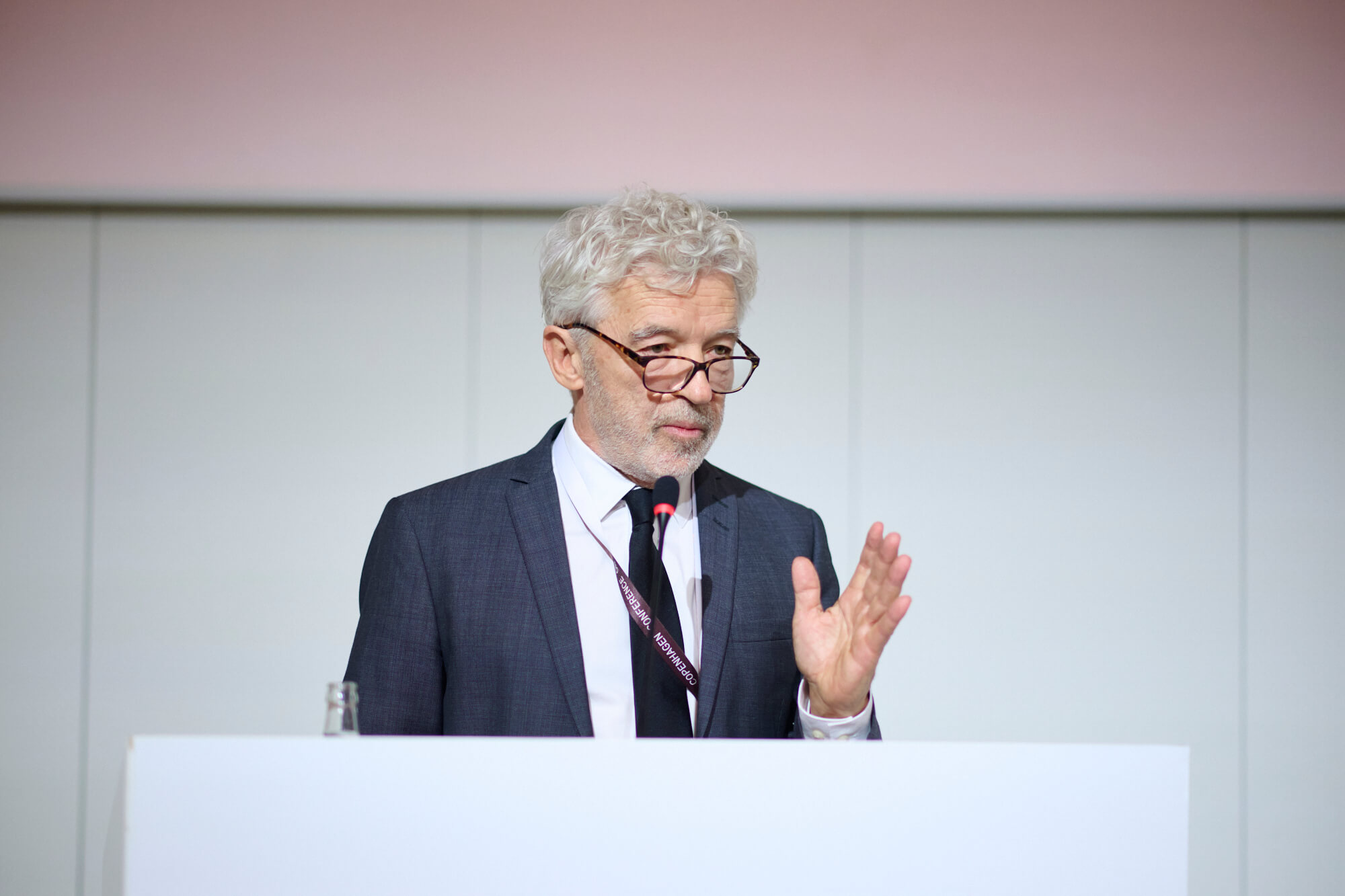
Conflict sensitive journalism (CSJ) empowers journalists to report conflicts professionally without feeding the flames. In Nairobi from 3 – 4 February, 24 global media experts gathered to discuss how to further develop conflict sensitive journalism as a reporting method in a two-day workshop organised by International Media Support (IMS) in collaboration with Nairobi University. The aim was to review the IMS handbook on Conflict Sensitive Journalism written by Ross Howard.
The experts representing media from Africa, South Asia and the Nordic countries, decided to strike stronger partnerships, revise the incumbent IMS CSJ handbook with broader ownership and continue to stay in close contact through a web group. For more on CSJ, read the background paper “Conflict Sensitive Journalism: Moving Towards a Holistic Framework.”
Handbook on Conflict Sensitive Journalism
Off the back of some initial experiences working with journalists during conflict in Sri Lanka, IMS published Ross Howard’s handbook as one of the organisation’s first tool-kits in journalism training in 2003. It has since been used by journalists in Sri Lanka, Afghanistan and Pakistan and developed into country-specific handbooks for the likes of Zimbabwe (2009) and Kenya (2007).
The book is a practical guide for journalists on how to cover conflicts, a method of reporting which avoids exacerbating conflict. The argument for such a tool was simple: providing “reliable information to the public in a time of violent conflict requires additional journalism skills. Reporters need to understand more about what causes conflict, and how conflict develops and ends. Reporters need to know where to look for these causes and solutions. By providing this information, journalism makes the public far more well-informed about the conflict beneath the violence, and can assist in resolving it (Ross Howard, 2003).
Conflict sensitive journalism still relevant
During their two-day deliberations, experts extensively debated its specific thematic areas and evaluated its usability after almost a decade of practical experience. Martin Landi of IMS, in his opening remarks told the gathering that this was a landmark initiative as IMS has embarked on a process of revisiting its intervention tools after 10 years of existence.
Dr Wambui Kiai, the head of the Nairobi University Journalism Department said that Kenya has been a major beneficiary of the handbook.
Howard in his televised speech to the conference said that the handbook still maintained its validity, but required some additional topics to be dealt with. Even after a decade, its precise, concise content still remains logical, he said.
Peter du Toit of the South African Rhodes University argued that journalists are generally ill-equipped with sufficient knowledge of the conflict environments that they are working in. Peter du Toit stressed that it is essential for journalists to be exposed to both skills and theory on conflicts.
Journalists lack knowledge of conflicts
Sweden’s leading journalist training institution Fojo’s Director Johan Romare claimed that not only the local journalists in conflict-ridden countries, but also high profile international journalists, lack proper knowledge about the conflicts on which they report. Christine Roehrs of Mediotek in Afghanistan said that Afghan journalists do not understand the conflict correctly due to lack of information, ethical conflicts and a lack of professional education.
Head of Pakistan’s leading media training institute Intermediary Adnan Rehmat, noted that the extensive media boom in his country during the past two decades had raised immense challenges – mainly by an eight-fold increase in the number of journalists. The average young 23-year old journalist has no formal education or professional training, let alone knowledge on the conflict, he said.
Both Ranga Kalansooriya and Susanna Inkinen of IMS argued that the safety issues of journalists in conflict environments are primarily linked to ethics and conflict sensitive journalism. Journalists in Afghanistan and their families, for example, face intimidation and death threats not just from Taliban militants, but also from warlords, drug barons, and even corrupt government officials and police who do not want the media spotlight on their activities. As such, some practitioners have noted a clear linkage between CSJ and the issue of safety and feel that it is crucial to train journalists how to stay safe while covering a conflict. The IMS approach to safety training and in establishing safety mechanisms for journalists has been a mixture of these areas, Ranga and Kalansooriya and Susanna Inkinen added.
New partnerships
Steven Youngblood of Uganda’s Park University, Lawrence Randhall of Libera Media Center, Steven Kahiya of Zimbabwe, Peter Mwaura of Kenya, Fiona Lloyd of Zimbabwe, Dru Menaker of IREX, Mathias Mayombwe of Uganda Media Development Foundation, Alwyn Alburo of the National Union of Journalists of the Philippine and Ngugi Muiru of the Nairobi University also made presentations at the workshop.
As a major achievement of the workshop, initial talks began between Nairobi University, Rhodes University of South Africa and Intermedia of Pakistan on striking up a potential partnership in CSJ training.
The IMS website will report on the developments of a new CSJ handbook as they unfold.