

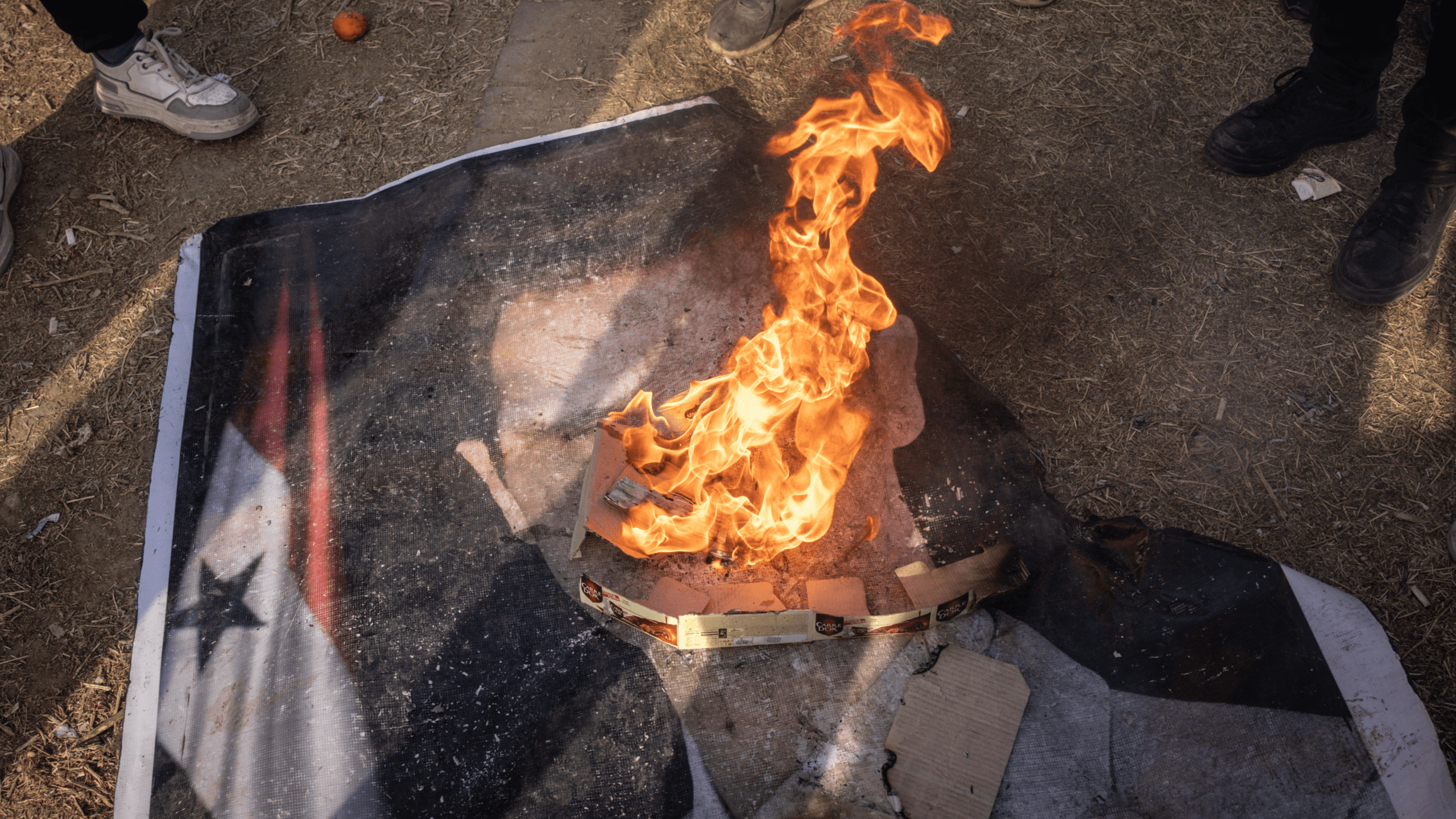
A picture of ousted Syrian leader Bashar al Assad in flames
Independent media in post-Assad Syria: A new chapter begins
On 8 December 2024, the fall of the Assad regime transformed the media landscape in Syria. Now, as funding dwindles, new challenges arise.
“The time now is exactly 18:18 PM Damascus time; Syria is without Bashar al-Assad.”
On 8 December 2024, a journalist broke the news of the Assad regime’s fall to the world. That moment changed everything. Reporters dropped their pseudonyms and revealed their real identities. After years of working in the shadows, they came forward publicly with their names, faces and locations. For the first time, they could claim their stories without fearing arrest, torture or death for themselves, their families or their friends.
Since then, faces have emerged from anonymity. Testimonies long silenced have resurfaced. Documents and sources once kept hidden are now public. Conversations that were once impossible – about the missing, about transitional justice, about accountability, peace and everything else that had been silenced – now fill the pages and platforms of independent media, including IMS’ Syrian partners.
Freedom of speech has become tangible inside Syria. From major cities to remote rural towns, our media partners in Syria are working alongside civil society organisations to reclaim public space, create room for democratic dialogue and rebuild trust with audiences exhausted by years of regime propaganda amplified by its supporters from Russia and Iran, as well as opposition media shaped by Gulf-funded agendas.
Syrian independent media has long worked under impossible conditions. Journalists were risking their lives inside Syria, while media organisations struggled to function from the diaspora. They fought to maintain credibility, pushed back against financially and politically driven agendas, rejected bias and hate speech and upheld professional ethics. Now, after the regime’s fall, they have returned to Syria, and they are reclaiming their narratives.
Partners’ materials released immediately after the regime’s fall of the regime:
A full issue of Enab Baladi newspaper about the fall of the Assad regime and related files
Our partners’ work did not end with exposing the old regime’s crimes. Today, they monitor every shift inside Syria and beyond its borders, tracking emerging challenges and decisions in domestic and foreign policy. They refuse to accept new red lines. They will not allow any authority, now or in the future, to silence them again.
Being on the ground gives them direct access to people, places, files and evidence needed to investigate and expose violations, abuses and massacres as they happen. These liberated voices are not easily silenced.
Key files covering violations and massacres:
Israel advances in its war; Suwaida: A battle of the losers in Syria
A human rights organization reveals the stealing of documents from Saydnaya prison.
Real change takes time and collaboration. Media organisations and civil society groups are working together across the country, leading joint initiatives and activities in multiple regions.
Despite the progress, 2025 has been a heavy year for Syrians. The past has resurfaced with all its losses, trauma and injustices. The present carries its own grief: fragmentation, new massacres and other violations. The future remains uncertain. Will there be justice and genuine accountability? Will the hard-won space for free expression endure?
What is clear is that Syrians and Syrian independent media have broken free from fear. IMS’ media partners are helping to shape the future and make real changes on the ground. For years, they worked towards this moment – the collapse of the regime, the chance to return and reclaim their role. At IMS, we stood with them, waiting for that moment to arrive.
Now, the Syrian media landscape faces a new challenge. Funding is dwindling, and in some cases it has stopped entirely. As one of our partners put it:
“We worked for such a moment, and today we stand with limited resources, unable to keep pace with changes at sufficient speed due to the decline in funding. Will we lose what we have built in terms of bridges connecting us to our audience? Will our role and position diminish?”
The importance of those questions cannot be overestimated. When Assad’s regime fell, governments and other influential actors across the world explicitly recognised the vital role that free media would play in putting Syria on a path towards accountability, stability and democracy. Over the past year, journalists and media organisations in Syria have indeed made remarkable and laudable efforts to fulfil that role on a backdrop, even while struggling to survive financially in the face of diminishing funds.
Now, it is vital that those who voiced their support to the Syrian people, when one of the world’s most long-lived and brutal dictatorships was finally ousted, make good on their words and help ensure that a free and independent media sector can survive and thrive in Syria.
Read more:
Statement on press freedom in post-Assad Syria by ARTA, Aljumhuriya, Rozana, Enab Baladi