


Belarus: “A year of turmoil – but change is on its way”
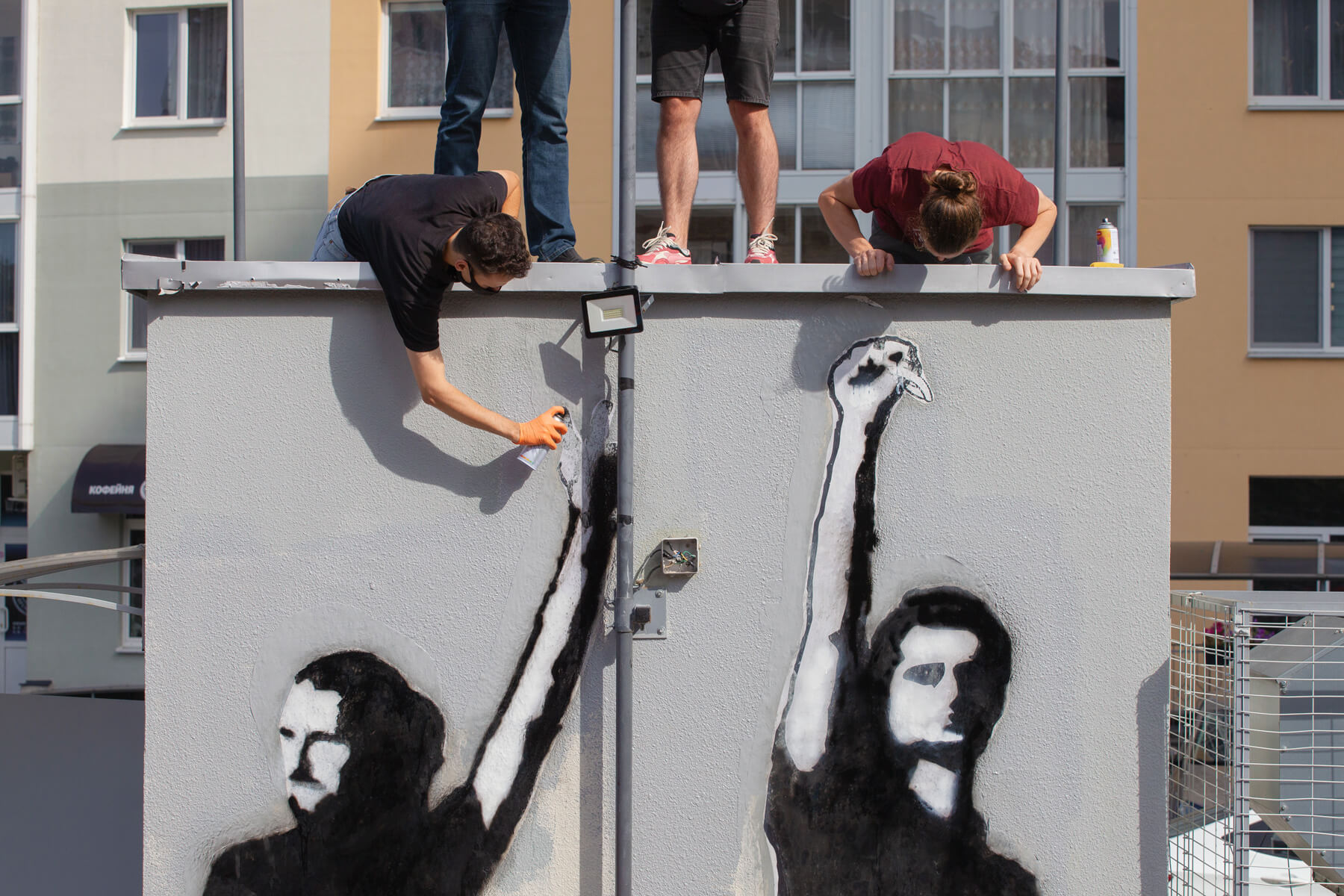
In December 2010, Belarusians took to the streets in a passionate show of protest against the government following flawed elections. The year that followed has been marked by turmoil, but there is no doubt in the mind of Belarusian editor Iryna Vidanava that change is on its way
By Helle Wahlberg, IMS
No one had predicted that 19 December 2010 would become a date to remember and perhaps a turning point in the history of Europe’s last dictatorship. In a show of extreme dissatisfaction with the authorities’ handling of the presidential elections, tens of thousands of Belarusians poured into the streets of the capital Minsk. The ensuing crackdown by the authorities on civil society and media was unprecedented. Over the past year, more than 3,500 people have been arrested; of these more than 100 were journalists. More than a dozen political prisoners remain behind bars, including three members of the Belarusian Association of Journalists (BAJ).
Declining trust in the regime
“We woke up to a different nation the day after the demonstrations,” says Iryna Vidanava, Belarusian editor of the online magazine 34mag.net in an interview with International Media Support from Minsk.
“After a year of liberalisation in the lead-up to the elections in December 2010, no one expected the severe government crackdown and persecution of activists. Then came a chain of events which have also had a severe effect on the country, such as the economic crisis and the bombing of the underground in April 2011. It has been a year of turmoil in which trust in the regime has declined and the regime is using all means possible to protect itself,” says Iryna Vidanava.
Tightening control over media
There has been an apparent tightening of control over civic and media freedoms since the December 2010 election. The number of political prisoners in the country has increased, media offices have been raided, journalists arrested and sentenced, and websites blocked. But these actions have produced a counter-wave of solidarity from ordinary citizens, who showed their support by providing funds where needed for arrested activists and equipment for repressed independent media. When the independent newspaper Nasha Niva was raided, readers donated more than 30 computers that allowed the editorial team to continue their work, according to Iryna Vidanava.
Resourceful independent media
One of the positive paradoxes during the harsh crackdown on media in Belarus over the last year has been the independent media’s ability to continue publishing despite heavy odds. According to Iryna Vidanava, not one independent media has closed down despite harassment and pressure by the authorities. Iryna Vidanava reports that the independent media is now effectively competing with state media for audiences on the internet. The audiences of independent news sites are up 150-200 percent since December 2010 and there has been a significant decline in the rankings of state-run media websites.
“What kept the independent media going, what gave us that professional drive was the solidarity shown to us by ordinary citizens and the fact that they could see we had an impact, that we were influencing people. As one of my colleagues said: “We never felt alone.”
New media as a mouthpiece
The Internet was also vital in the continued work of the independent media during and after the protests, serving as the population’s only alternative source of information to state media. When the government blocked Internet sites, independent media switched to social networking accounts such as Twitter.
“The authorities simply cannot block the entire Internet, which has almost 4 million users in Belarus, without angering people. Instead, new strict laws regulating the Internet have been imposed on media,” Iryna Vidanava explains.
Crowd sourcing – the inclusion of ordinary citizens in reporting on unfolding events during and after the elections – was also a key component of success of independent media in Belarus in the last year. This type of reporting by Crisisby.net/Electby.org gave citizens an outlet to voice their opinions and frustrations.
Youth exposed to brutal regime
Iryna Vidanava’s own magazine, 34 Mag, which is a magazine for youth produced by young people, did not suffer any attacks by the authorities. For many on her young team, the December election was their first election and the first time they experienced the brutality of the regime. Their coverage of the protests became a breakthrough for the magazine, which increased its readership and managed to link a younger, normally apolitical audience to the country’s growing political agenda.
While three journalists continue to remain in prison after being convicted of anti-government acts, Iryna Vidanava feels that the level of fear amongst independent media is slowly decreasing. There is still a need, however, for continued international attention to, and solidarity and support for, the plight of the people, civil society and media in Belarus on the part of the EU, which should reexamine its policies on Belarus.
“International pressure does make a difference,” she says.
Russian demonstrations a sign of the times
The latest demonstrations against Vladimir Putin in neighboring Russia are also a sign of the times, according to Iryna Vidanava. They are a clear signal to the Belarusian people that any regime can be shaken. However, given the recent closer relations between the two countries (Russia has secured complete ownership of Belarus’ gas pipelines), the two governments are expected to stand together and resist reforms needed to solve the economic crisis, as these would also lead to demands for social and political change.
Change in Belarus will come from within Belarus, Iryna Vidanava emphasises.
“What we have seen in the past year is the beginning of the end. It is just a question of how long it will take.”